


Every week, intriguing new history books are published–far more than we have space to feature on Drafting the Past! To help you keep up with some of the latest releases in historical non-fiction, below are some of the books coming out this week that caught my eye. If you’ve read any of these, I’d love to hear what you think!
Note: Bookshop.org links are affiliate links.
Jeremy Varon, Our Grief Is Not a Cry for War: The Movement to Stop the War on Terror (University of Chicago Press)
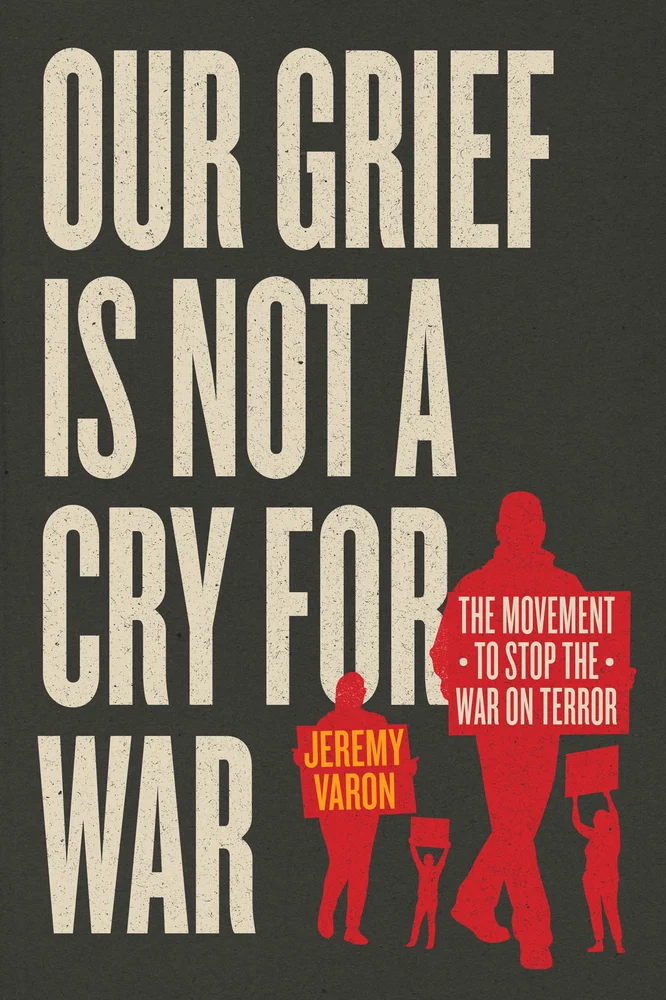
From the publisher: “Just after 9/11, President George W. Bush climbed the rubble where the World Trade Center had stood. Surrounded by shouts of anger, he said, “The people who knocked these buildings down will hear all of us soon!” With these words, Bush ushered in the War on Terror. Quickly, a global protest movement mobilized against it, reshaping the political, moral, and media landscape.
Jeremy Varon’s Our Grief Is Not a Cry for War is the definitive history of that movement. Millions of Americans participated in thousands of acts of protest, from demonstrations to civil disobedience to peace encampments in Iraq. On February 15, 2003, up to 30 million people worldwide took to the streets in the largest protest in human history. But this enormous outcry was not enough to stop the US invasion of Iraq. Varon explores the limits to the movement’s power but also shows how it worked to make opposition to the Iraq War a part of public debate, hastening its end and limiting the broader War on Terror. In the book, you’ll meet the families of the 9/11 victims, Iraq War veterans, and Gold Star families who spoke out against war.
Written with a lively and revelatory voice, Our Grief Is Not a Cry for War illuminates the passion of the peace movement, the mark it made, and the enduring legacies of the War on Terror.”
Paul Gillingham, Mexico: A 500-Year History (Atlantic Monthly Press)
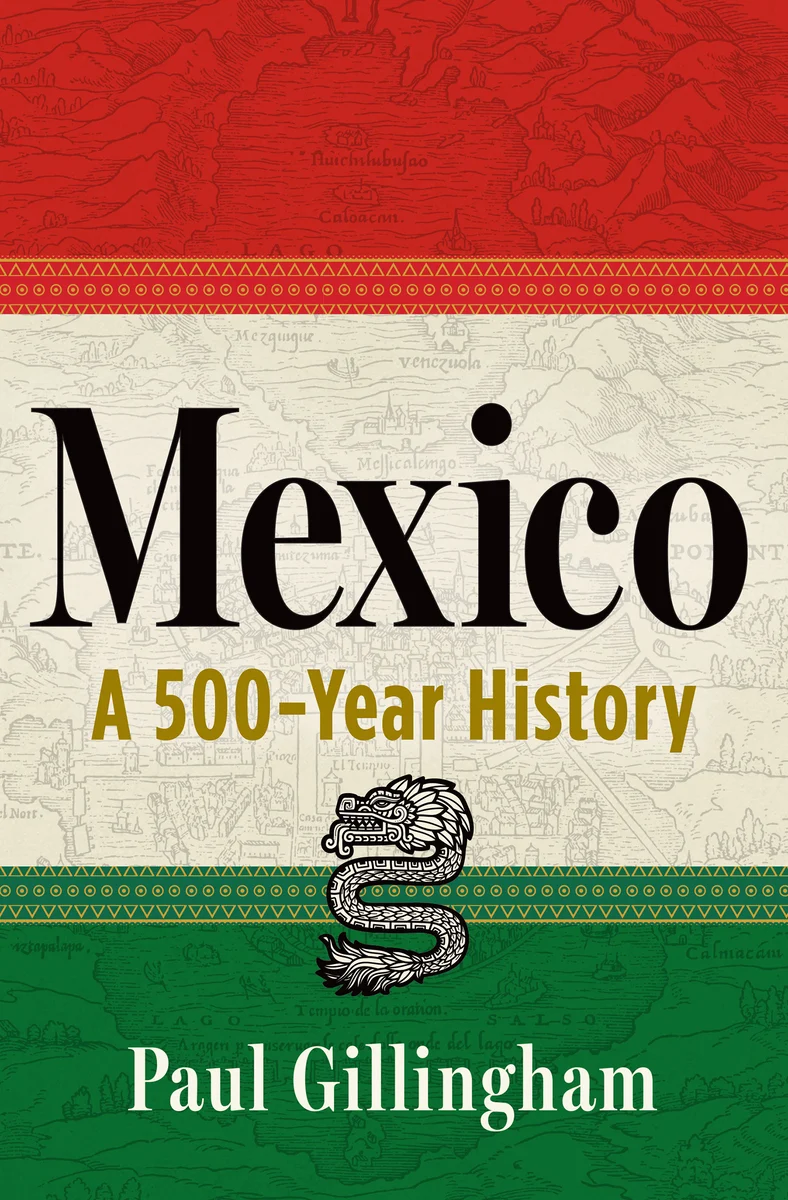
From the publisher: “At the beginning of his masterful work of scholarship and narration, Paul Gillingham writes, from its outset “Mexico was more profoundly, globally hybrid than anywhere else in the prior history of the world.” Over the ensuing five centuries, Mexicans have prefigured and shaped the course of human lives across the globe.
Gillingham begins in 1511 with the dramatic shipwreck of two Spanish sailors in the far south of Mexico. Ten years later Hernán Cortés led an army of European adventurers and indigenous rebels to seize the legendary island city of Tenochtitlán, the center of Montezuma’s empire, the largest in the Americas. The capture of the future Mexico City was, more than an extraordinary military event, the collision of two long-separated worlds, radically different in everything from biota to urban planning. Spaniards discovered tomatoes, chocolate, and a city larger and more sophisticated than anything they had ever seen. Mexicans discovered horses, wheels, and lethal germs, sparking a cataclysmic century of disease that wiped out a majority of the pre-existing population and led to a unique recombination of European and indigenous cultures. The industrial mining of Mexico’s silver transformed the wealth and trade of the world. Mexico’s independence from the Spanish Empire in 1821 led to a calamitous mid-century war with the United States and one of the first great social revolutions that brought peace for Mexicans throughout many of the global horrors of the 20th century, before the country itself collapsed into the violence of the cartels and a refugee crisis in the 2000s.
The history of Mexico has been, Gillingham shows, one of suffering empire but also of overcoming. Through it all the country set new standards for inclusivity, for progressive social policies, for artistic expression, for adroitly balancing dictatorship and democracy. While racial divides endured, so too did indigenous peoples, who enjoyed rights unthinkable in the United States. Mexico was among the first countries to abolish slavery in 1829, and Mexicans elected North America’s first Black president, Vicente Guerrero, its only indigenous president, Benito Juárez, and its only woman president, Claudia Sheinbaum.
As elegantly written as it is powerful in scope, rich in character and anecdote, Mexico uses the latest research to dazzling effect, showing how often Mexico has been a dynamic and vital shaper of world affairs.”
Reena M. Goldthree, Democracy’s Foot Soldiers: World War I and the Politics of Empire in the Greater Caribbean (Princeton University Press)
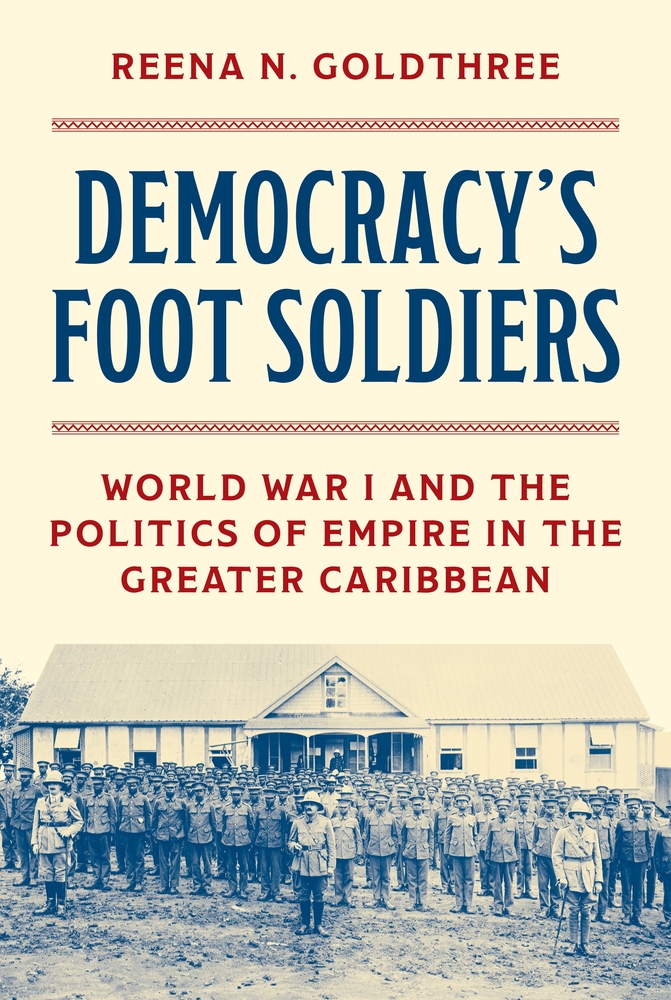
From the publisher: “Following the outbreak of World War I, tens of thousands of men from the British Caribbean volunteered as soldiers to fight on behalf of the British Empire. Despite living far from the bloody battlefields of Europe, these men enlisted for a variety of reasons—to affirm their masculine honor, pursue economic mobility, or enhance their standing as colonial subjects. Democracy’s Foot Soldiers offers a sweeping account of the British West Indies Regiment, the military unit established in 1915 for Caribbean volunteers, documenting their service during the war and their dramatic battles for racial equality and fair treatment in the armed forces and on the home front.
Drawing on previously overlooked archival sources in the Caribbean, England, and United States, Reena Goldthree demonstrates how wartime military mobilization spurred heightened demands for social, economic, and political reform in the colonial Caribbean. She recovers the forgotten contributions of Afro-Caribbean troops during the war, following their harrowing journeys to military camps in Europe, Africa, and the Middle East. Goldthree chronicles how, after the war, soldiers, their families, and their civilian allies launched their own “war for democracy,” strategically using the rhetoric of imperial patriotism—rather than the more militant language of anticolonial nationalism—to fight for respect and equality.
Democracy’s Foot Soldiers places these soldiers at the forefront of popular struggles over race, labor, and economic justice in the early twentieth-century Caribbean, showing that the war years were a crucial period of political ferment and mass mobilization in the region.”
Daniel Lord Small, Magdalena Coline: A Life Beyond Slavery in Mediterranean Europe (Princeton University Press)
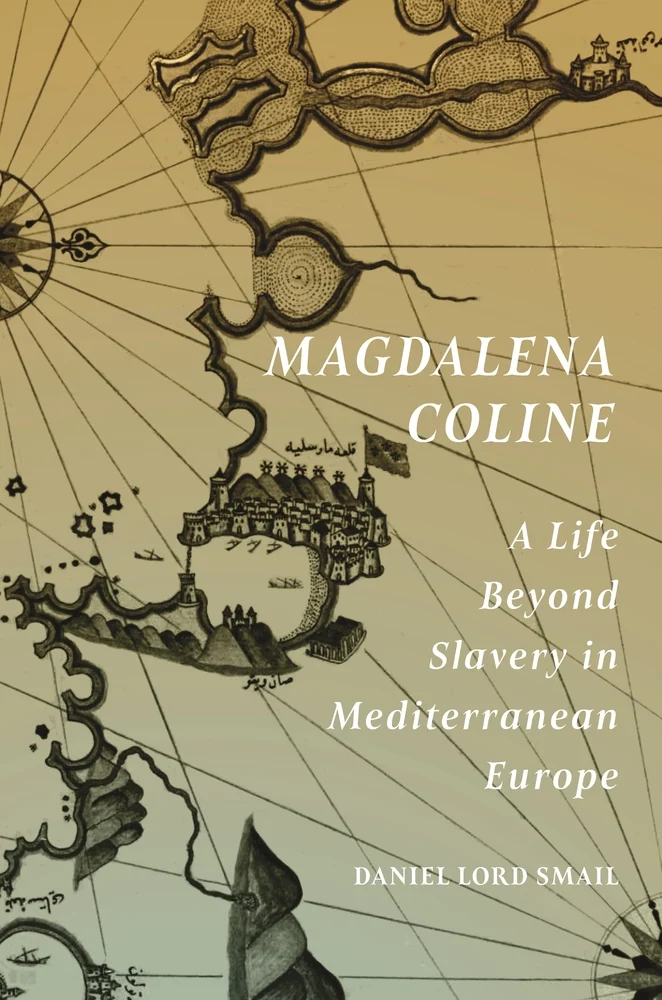
From the publisher: “In 1387, a young Muslim woman from North Africa was captured on a galley in the Bay of Naples and brought to Marseille as a slave. For more than ten years, she was held in bondage to a shipwright and privateer named Peire Huguet. Daniel Lord Smail tells the extraordinary story of Magdalena Coline, a woman who dared to file suit against the man who called himself her master, and whose passage from servitude to freedom raises tantalizing questions about how the people of her time made sense of slavery as a social category.
In a masterful narrative that takes readers from the waters of the Mediterranean to the court of the Angevin King Louis II, claimant to the throne of Naples, Smail describes how Peire, pressed by Magdalena’s supporters, reluctantly granted her a tacit manumission through her marriage to her first husband, whose death two years later placed her in a state of considerable ambiguity. In 1406, following her second marriage to an immigrant shoemaker, a dispute with Peire exploded in the law courts of Marseille, where it played out over two tumultuous years through numerous suits and appeals. In a dramatic turn of events, Magdalena traveled to the royal court in nearby Aix-en-Provence, where she successfully petitioned the king and returned home victorious.
Drawing on court records and an array of other archival sources from the period, Magdalena Coline brings these remarkable legal proceedings vividly to life, shedding new light on the ways slavery was understood and practiced in the late medieval Mediterranean world.”
Ferdinand Mount, Soft: A Brief History of Sentimentality (Bloomsbury Continuum)
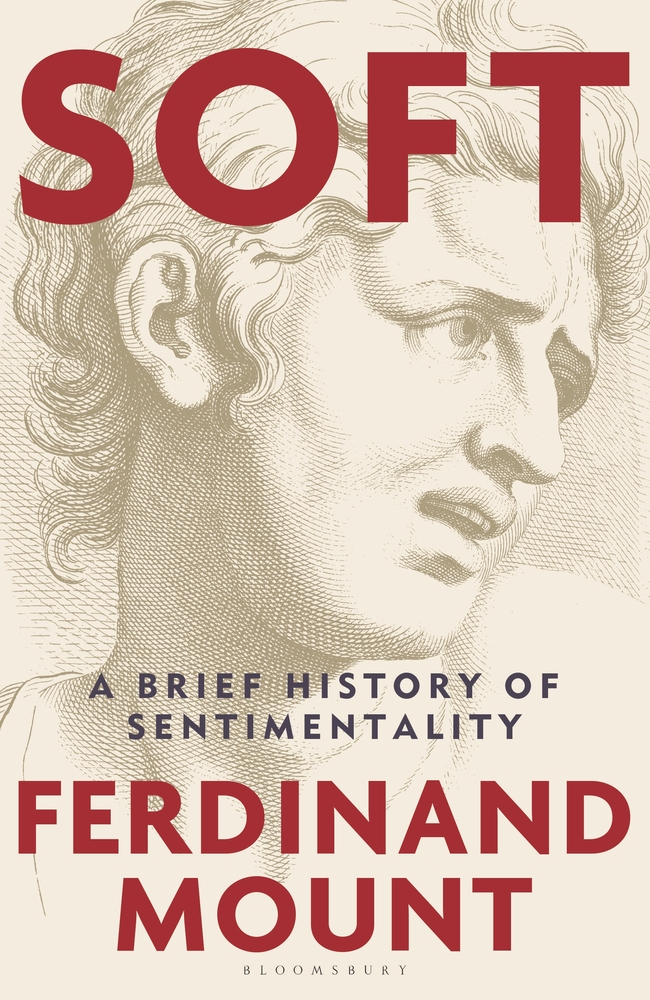
From the publisher: “Whatever we think we feel, you can be sure that the past has had a part to play in it. In Soft, Ferdinand Mount tells the millennium-long history of emotion through delightful snapshots, often mischievous storytelling and a masterly command of history.
Revealing all the ways people in the past expressed their grief and joy, Mount explores the shifting importance societies have placed on empathy for the misfortunes of others. Each seismic moment, Mount argues, from the French Revolution to Civil Rights, has had a corresponding sentimental revolution that has fuelled great political turning points and come to define human civilization.
But during this long history, powerful feelings have frequently come under attack. No one wants to be accused of being sentimental; its detractors call it soppy, effeminate and populist – the stuff of soap operas and pop songs. The Reformation tried to stamp out excessive emotion, the Victorians resolutely maintained their stiff upper lips and no one loathed sentimentality more than the modernists – and yet, today, Mount argues it is not the stoics who are ruling the roost: we are living in an age of emotion.
From the Occitan poets of the 12th century to Paul McCartney' songs, and modern debates around woke, this is a witty insight into the story of emotions and the way they have swayed human history.”
Lauretta Malloy Noble and LeeAnet Noble, Black, White, Colored: The Hidden Story of an Insurrection, a Family, a Southern Town, and Identity in America (Amistad)
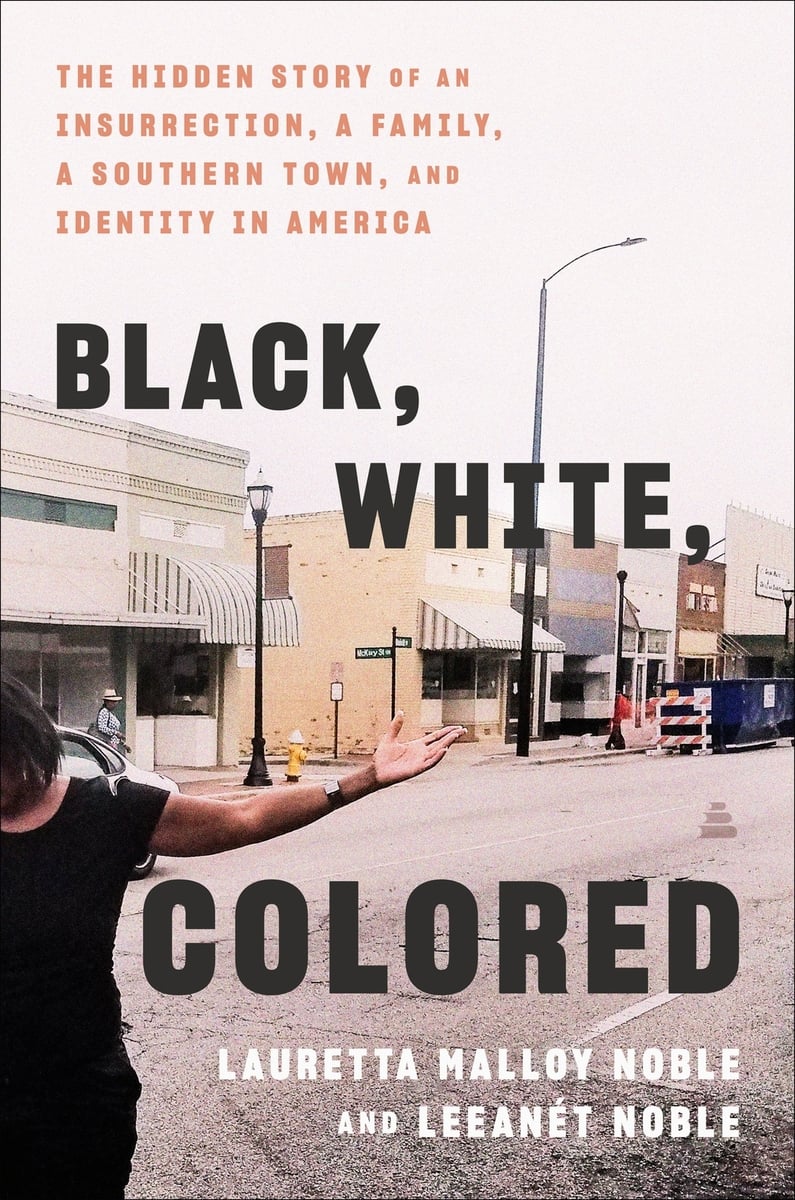
From the publisher: “In the late nineteenth century, Laurinburg, North Carolina, was a beacon of racial calm—a place where Blacks and whites could live and work together. Black families like the Malloys became landlords, business owners, and doctors. Thriving together and changing the economic landscape. But that progress was shattered on the eve of Election Day, 1898, when supremacist groups launched a bloody attack, forcing Laurinburg’s Black citizens to flee. This riot was beginning of the only recorded insurrection, stripping middle-class Blacks—who made strides during Reconstruction—of their seats on every electoral board.
With meticulous research drawn from sources including The New York Age and census records, the descendants of the town's early Black leaders, Lauretta Malloy Noble and LeeAnét Noble uncover the trailblazing achievements of their ancestors. Piecing together proof of Black resilience in a region shaped by profound adversity whose contributions extended beyond Laurinburg to institutions including Howard University and Meharry Medical College.
Black, White, Colored is the first book to shine a spotlight on the events in Laurinburg and its impact on the town’s Black occupants, giving Laurinburg its rightful place in American history.”
Adam Cohen, Captain’s Dinner: A Shipwreck, An Act of Cannibalism, and a Murder Trial that Changed Legal History (Author’s Equity)
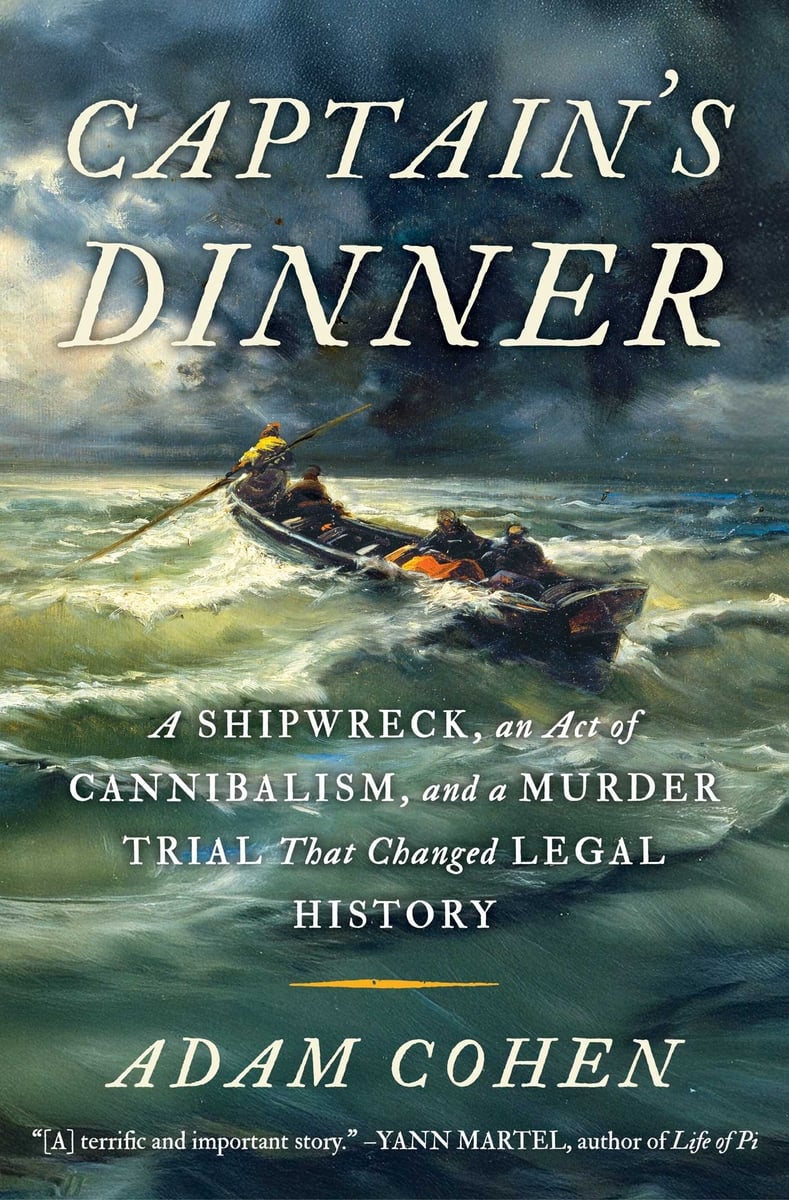
From the publisher: “On May 19, 1884, the yacht Mignonette set sail from England on what should have been an uneventful voyage. When their vessel sank in the Atlantic, Captain Thomas Dudley and his crew found themselves adrift in a tiny lifeboat. As days turned to weeks, they faced an unthinkable choice: starve to death or resort to cannibalism.
Their decision to sacrifice the youngest—17-year-old cabin boy Richard Parker—ignited a firestorm of controversy upon their rescue. Instead of being hailed as heroes and survivors, Dudley and his crew found themselves at the center of Regina v. Dudley and Stephens, a landmark murder trial that would establish the legal precedent that necessity cannot justify murder—a principle that continues to shape Anglo-American law today.
In Captain's Dinner, acclaimed journalist, Pulitzer Prize juror, and New York Times bestselling author Adam Cohen masterfully depicts both the harrowing weeks at sea and the sensational trial that followed. "Is killing one innocent person justified if it saves the lives of three others? Cohen's answer—in this riveting account—reads like a thriller" (former U.S. Secretary of State Antony J. Blinken). Through this Victorian tragedy, Cohen reveals an enduring conflict between primal instincts and moral principles. This book will “make you think long and hard about what you might do to survive” (Ezekiel J. Emanuel, M.D., Ph.D., University of Pennsylvania).
Perfect for readers of David Grann's The Wager and Nathaniel Philbrick's In the Heart of the Sea, this pulse-pounding true story has become a real-life example of one of life's greatest moral dilemmas. “Thoroughly researched and impeccably argued” (Martel). Rich with narrative detail and real-life courtroom twists, “brilliant and profound,” (bestselling author Amy Chua), Captain's Dinner strikes at the heart of a question that haunts us all: When does survival justify murder?”
Yossef Rapoport, Becoming Arab: The Formation of Arab Identity in the Medieval Middle East (Princeton University Press)
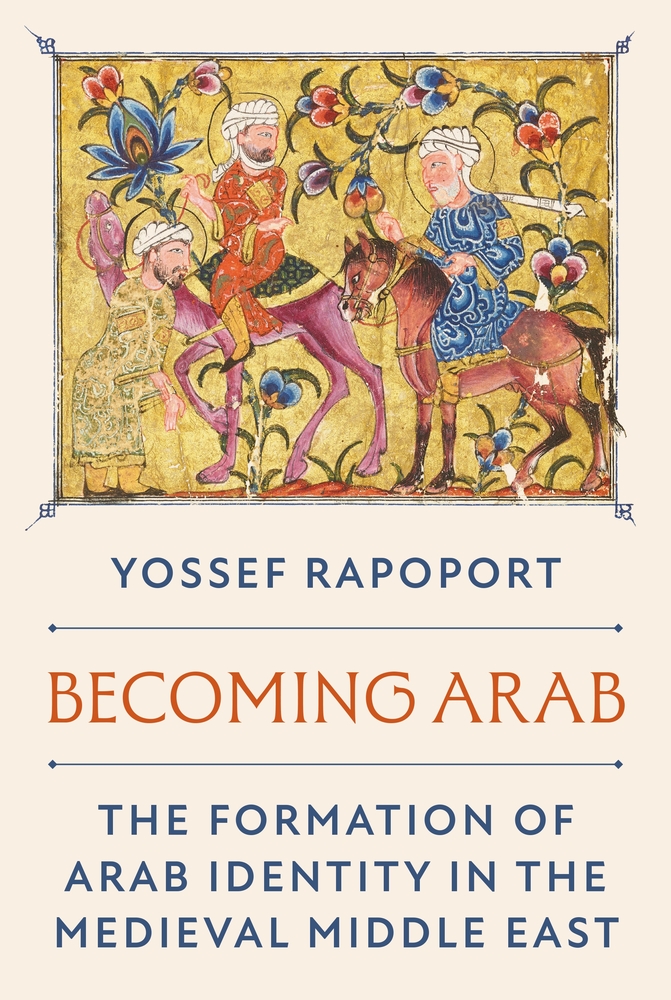
From the publisher: “During the later Middle Ages, peasants in Egypt and Greater Syria came to view themselves as members of Arab clans that had originated in the Arabian Peninsula. They expressed their Arab identity by wearing Arab headgear, adopting an Arab dialect, and circulating a new genre of popular epic that told heroic tales of pre-Islamic Arabia. In Becoming Arab, Yossef Rapoport argues that this proliferation of Arab village clans did not come about through mass migration and displacement but reflected an internal transformation. Drawing on extensive documentary, literary, administrative, and material evidence, Rapoport shows that the widespread formation of Arab village clans in late medieval Egypt and Greater Syria was a gradual process, the result of mass rural conversion to Islam and a new landholding regime in which peasants shifted from being landowners to being tenants. After the eleventh century, Rapoport contends, Middle Eastern villagers were turning Arab.
These Arab village clans were not merely administrative regimes imposed from above; villagers enthusiastically embraced their new identities. New converts to Islam adopted Arab lineages to claim status and as a counter-identity to urban-based Turkish elites. Arab identity was used by clans to mobilize rural uprisings against the ruling sultans and to resolve disputes among villagers. Challenging traditional historiography of the Middle East, which views Arab clansmen as pastoralists whose identity separated them from that of the wider peasantry, Rapoport argues that the pervasive establishment of Arab village clans was the most important development in the history of the Middle Eastern countryside in the Islamic era.”
Tim McGrath, Three Roads to Gettysburg: Meade, Lee, Lincoln, and the Battle that Changed the War, the Speech That Changed the Nation (Dutton Caliber)
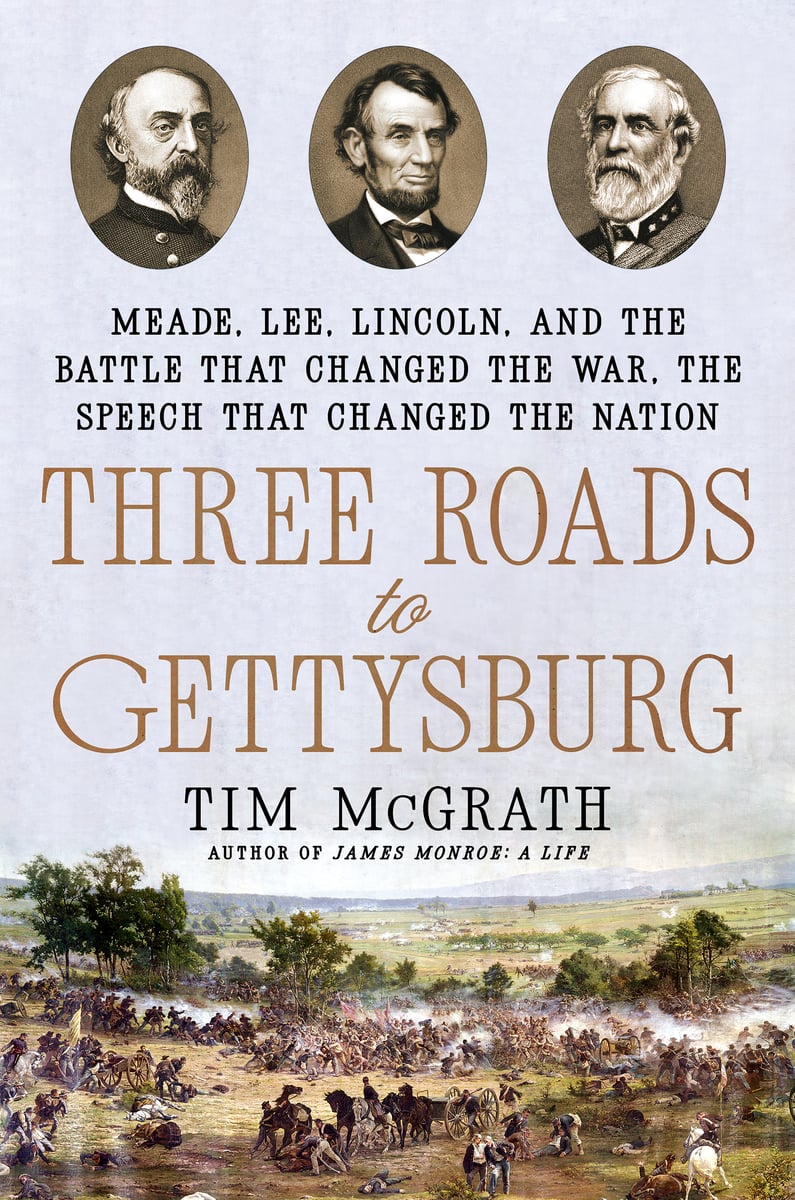
From the publisher: “Three Roads to Gettysburg shows how the seemingly unbeatable Robert E. Lee was defeated by a quiet, unassuming Union general named George Meade, a man who never wanted to be a soldier, and was selected by Lincoln over more obvious candidates. This briskly-paced narrative covers the three days of combat at Gettysburg, portraying how Meade and Lee made crucial decisions and guided their armies in this epic clash.
At last, McGrath brings light to the story of George Meade, one of the most significant yet overlooked generals in American history. Three Roads to Gettysburg is the definitive, untold history of those four days at Gettysburg and a tribute to the unlikely character who would achieve the Civil War’s most famous victory.”
Michael E. Jink, Dissenting Forces: A History of Abolition and Black Thought in Higher Learning (NYU Press)
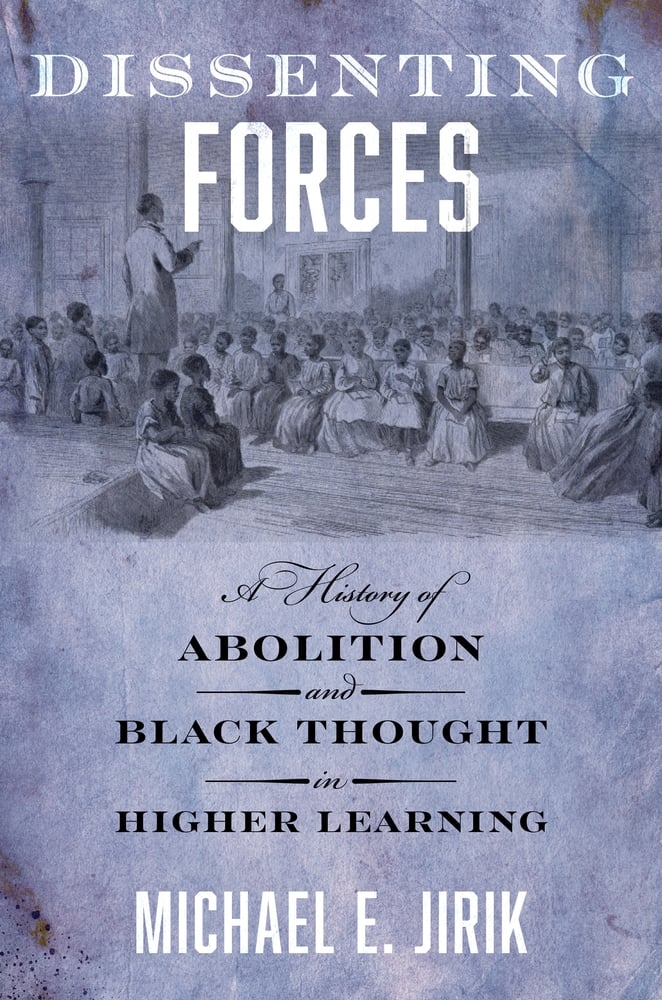
From the publisher: “Since their inception in North America, universities have had symbiotic ties to racial slavery and settler colonialism and were incubators of racist thought. In Dissenting Forces, Michael E. Jirik offers a comprehensive study of an underrepresented history: the rise and development of Black thought and abolitionist resistance in American universities.
Jirik offers a rich scope of abolitionist protests at colleges, demonstrating how enslaved people, Black abolitionists, and student abolitionists resisted enslavement and racism within, and on the boundaries of, college campuses for centuries. Studying their history and experiences, Black people used intellectual work to advance their struggle for liberation. With the advent of a transformed abolition movement after 1830, Black and white student abolitionists intellectually fought colonizationists on campus to shape arguments for Black freedom and intellectuality that challenged dominant white-supremacist ideologies. In turn, they created a student movement for Black freedom and human equality, making demands for admissions into colleges, and creating the earliest Black colleges in the United States.
Demonstrating the ways Black people have resisted racism and forms of oppression in higher learning, Dissenting Forces sheds new light on the significance of Black self-determination and the continuity of Black knowledge traditions committed to creating a different world. Collectively, they developed an idea of Black education's liberatory potential.”
Simon Winchester, The Breath of the Gods: The History and Future of the Wind (Harper)
From the publisher: “What is going on with our atmosphere? The headlines are filled with news of devastating hurricanes, murderous tornadoes, and cataclysmic fires affecting large swaths of America. Gale force advisories are issued on a regular basis by the National Weather Service.
In 2022, a report was released by atmospheric scientists at the University of Northern Illinois, warning that winds—the force at the center of all these dangerous natural events—are expected to steadily increase in the years ahead, strengthening in power, speed, and frequency.
While this prediction worried the insurance industry, governmental leaders, scientists, and conscientious citizens, one particular segment of society received it with unbridled enthusiasm. To the energy industry, rising wind strength and speeds as an unalloyed boon for humankind—a vital source of clean and “safe” power.
Between these two poles—wind as a malevolent force, and wind as savior of our planet—lies a world of fascination, history, literature, science, poetry, and engineering which Simon Winchester explores with the curiosity and vigor that are the hallmarks of his bestselling works. In The Breath of the Gods, he explains how wind plays a part in our everyday lives, from airplane or car travel to the “natural disasters” that are becoming more frequent and regular.
The Breath of the Gods is an urgently-needed portrait across time of that unseen force—unseen but not unfelt—that respects no national borders and no vessel or structure in its path. Wind, the movement of the air, is seen by so many as a heavenly creation and generally a thing of essential goodness. But when it flexes its invisible muscles, all should take care and be very afraid.”
Charlotta Forss, Mapping the North: Myth, Exploration, Encounter (Bodleian Library)
From the publisher: “Maps have played a central role in our understanding of what and where defines the North. At the same time, the northernmost reaches of our world have, for much of history, been difficult to navigate and verify, from the mythical islands on medieval maps to the itineraries of Arctic explorers in the nineteenth century. This has inspired inventive mapping strategies, as well as ongoing struggles to define what constitutes believable cartographic information.
This beautifully illustrated book takes the reader on a journey to examine the rich, and sometimes contentious, history of how mapmakers have understood and processed knowledge about a region they described as the North. In the process of mapping, the North as a place changed from an inaccessible and vividly imagined unknown to a region claimed and exploited by southern nations. What emerges is a riveting story of exploration, survival, and cartographic skill bound up with conceptions of nature, religion and politics extending far beyond the Arctic.”
Katherine Crooks, At Home in the Cold: Domestic Culture in Arctic Exploration, 1890-1940 (McGill-Queen’s University Press)
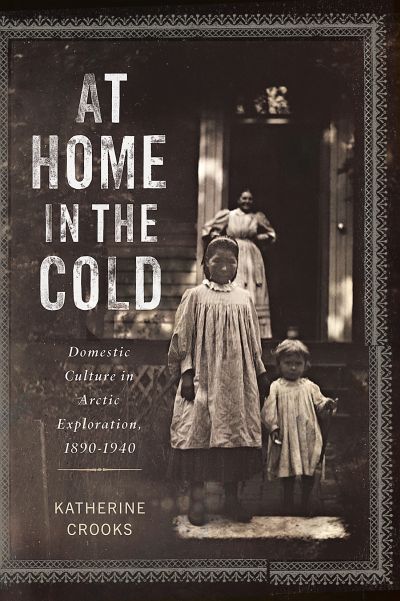
From the publisher: “In the late nineteenth and early twentieth centuries, the idea of home came into focus as a place of warmth and comfort, associated with interior spaces and feminine touches. In the same period, writing about the Arctic as a frigid and inhospitable landscape proliferated. American readers were fascinated by stories of Arctic exploration and supposedly heroic feats of survival by rugged white men. Moving across these opposing pictures were a handful of white and northern Indigenous women who travelled between the eastern Arctic and America from 1890 to 1940 in connection with exploratory expeditions. Their journeys and recollections challenged prevailing ideas about home, the North, and the rightful place of women. At Home in the Cold brings to light the histories of five women involved in Arctic exploration. The stories of three white women explorers – Mina Hubbard, Josephine Peary, and her daughter, Marie Peary – reveal the importance of middle-class domestic ideology to understanding the history of Arctic exploration, as they sought to transform the Arctic into a more familiar environment. Their journeys are considered alongside the stories of two northern women – Eqariusaq, from Greenland, and Elizabeth Ford, born in Labrador – who travelled to the United States in connection with Arctic expeditions. They, too, made comparisons of eastern Arctic and American environments that were rooted in their experiences of the Arctic as a natural home. Representations of the Arctic as a difficult place to live continue to dominate outsider perceptions of the North as an inferior region, with significant implications for northern residents today. At Home in the Cold considers the colonial implications of home and domestic ideology in the Arctic context.”
Douglas Century, Crash of the Heavens: The Remarkable Story of Hannah Senesh and the Only Military Mission to Rescue Europe’s Jews During World War II (Avid Reader Press/Simon & Schuster)
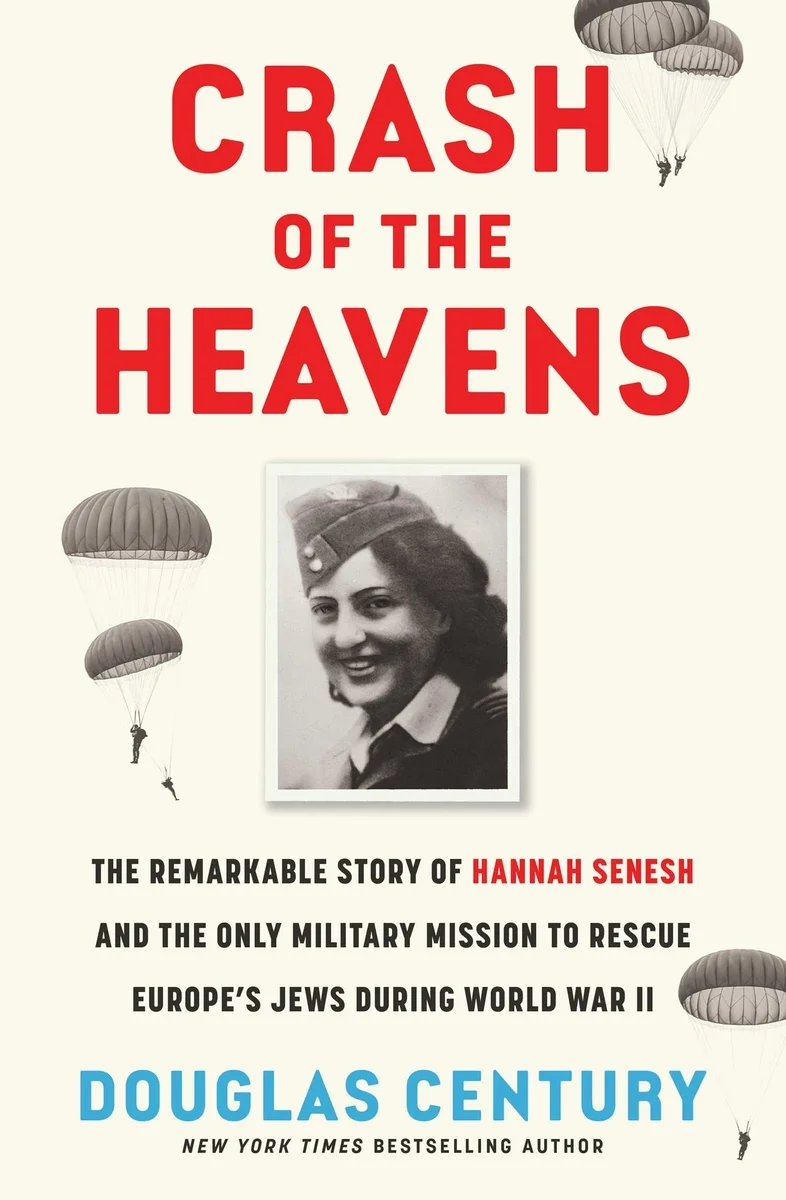
From the publisher: “In the years before World War II, thousands of young Jewish men and women escaped Europe, seeking safety in the British Mandate for Palestine. By 1942, horrifying reports began to spread about ghettos being liquidated, industrialized killing centers in Poland, and a chilling campaign to exterminate Europe’s entire Jewish population. When it became clear that the Allies were unwilling to spare any forces from the war effort to save civilians, the Jewish community in Palestine came up with a daring plan.
Working with British Military Intelligence, an elite unit of young Jewish paratroopers volunteered to return to Eastern Europe. Once behind enemy lines, they would use their expertise in the local languages and terrain to rescue thousands of downed Allied pilots and escaped POWs who were trapped with no way to communicate—highly trained airmen desperately needed by the British and American air forces to fly more bombing missions.
At the same time, these volunteer commandos would help Jewish civilians escape deportation to Auschwitz and other death camps or take up arms in resistance against the Nazis. Hannah Senesh was one of only three female paratroopers who risked everything to infiltrate occupied Europe.
In 1939, at just eighteen years old, Hannah emigrated from Hungary to the British Mandate for Palestine, where she dreamed of being a poet and a schoolteacher. Instead, she became a poet and a paratrooper. Five years after fleeing Europe, Hannah parachuted back into occupied territory as a freedom fighter with the most crucial role in her team: the wireless operator tasked with sending and deciphering top-secret British radio codes.Though captured almost immediately after crossing the border into Hungary, she refused to give up her radio codes or any information about her mission, despite enduring months of horrific torture. Her final act of defiance—choosing to die before a firing squad rather than beg for clemency—cemented her legendary status as the “Jewish Joan of Arc.”
Hannah’s legacy lives on today in the widely published diary she’d kept since age thirteen and in her poetry which has inspired generations. Each year on Holocaust Remembrance Day, a short poem Hannah composed on the shores of the Mediterranean in 1942 is sung at ceremonies around the world. Titled “Eli, Eli,” or “My God, My God,” it has become a modern hymn, taught in schools, sung in synagogues, and printed in thousands of prayerbooks.
More than just a gripping historical account of Hannah’s life and afterlife, Crash of the Heavens offers a powerful reminder of the human spirit’s ability to shine, even in the darkest of times.
Benjamin Wilson, Strange Stability: How Cold War Scientists Set Out to Control the Amrs Race and Ended Up Serving the Military-Industrial Complex (Harvard University Press)
From the publisher: “Do scientists speak truth to power? During the Cold War, a group of elite American strategists and science advisors claimed to do precisely that. Styling themselves as figures of rationality and restraint, they insisted that mutual assured destruction was the natural logic of the atomic age: as long as nuclear deterrence was credible, no one would ever shoot first. This doctrine, known as “strategic stability,” became the foundation of the arms control movement, earning its promoters widespread admiration as independent thinkers and steadfast peacemakers. But in this crucial counterhistory, Benjamin Wilson shows that we have misunderstood them and their efforts. Arms controllers, he reveals, worked not to restrain the nuclear arms race but to marginalize more radical approaches to disarmament.
As Wilson makes clear, strategic stability was never the objective condition the analysts presented it as. It was a flexible, contested metaphor based on ideas from physics, economics, and cybernetics, capable of justifying a wide range of policies. Yet the advisors insisted on one upshot above all: constant military research and development and the continuous upgrading of America’s strategic arsenal. That these policies benefited the military-industrial complex is no surprise, since many arms control thinkers were creatures of the Pentagon and corporate defense contractors. Some even spoke out against missile development in public while backing lavish funding behind closed doors.
Strange Stability powerfully corrects decades of mythmaking surrounding arms control. At the same time, Wilson offers a sobering reflection on the dream of technocratic restraint. The well-placed insider who resists powerful institutions is an enticing character, but more fictional than real.”
