


Every week, intriguing new history books are published--far more than we have space to feature on Drafting the Past! To help you keep up with some of the latest releases in historical non-fiction, below are some of the books coming out this week that caught my eye. If you've read any of these, I'd love to hear what you think!
Note: Bookshop.org links are affiliate links.
Arnoud S. Q. Visser, On Pedantry: A Cultural History of the Know-it-All (Princeton University Press)

From the publisher: Intellectuals have long provoked scorn and irritation, even downright aggression. Many learned individuals have cast such hostility as a badge of honor, a sign of envy, or a form of resistance to inconvenient truths. On Pedantry offers an altogether different perspective, revealing how the excessive use of learning has been a vice in Western culture since the days of Socrates. Taking readers from the academies of ancient Greece to today’s culture wars, Arnoud Visser explains why pretentious and punctilious learning has always annoyed us, painting vibrant portraits of some of the most intensely irritating intellectuals ever known, from devious sophists and bossy savantes to hypercritical theologians, dry-as-dust antiquarians, and know-it-all professors. He shows how criticisms of pedantry have typically been more about conduct than ideas, and he demonstrates how pedantry served as a weapon in the perennial struggle over ideas, social status, political authority, and belief. Shifting attention away from the self-proclaimed virtues of the learned to their less-than-flattering vice, Visser makes a bold and provocative contribution to the history of Western thought. Drawing on a wealth of sources ranging from satire and comedy to essays, sermons, and film, On Pedantry sheds critical light on why anti-intellectual views have gained renewed prominence today and serves as essential reading in an age of rising populism across the globe.
Kim Bowes, Surviving Rome: The Economic Lives of the Ninety Percent (Princeton University Press)

From the publisher: The story of ancient Rome is predominantly one of great men with great fortunes. Surviving Rome unearths another history, one of ordinary Romans, who worked with their hands and survived through a combination of grit and grinding labor. Focusing on the working majority, Kim Bowes tells the stories of people like the tenant farmer Epimachus, Faustilla the moneylender, and the pimp Philokles. She reveals how the economic changes of the period created a set of bitter challenges and opportunistic hustles for everyone from farmers and craftspeople to day laborers and slaves. She finds working people producing a consumer revolution, making and buying all manner of goods from fine pottery to children’s toys. Many of the poorest working people probably pieced together a living from multiple sources of income, including wages. And she suggests that Romans’ most daunting challenge was the struggle to save. Like many modern people, saving enough to buy land or start a business was a slow, precarious slog. Bowes shows how these economies of survival were shared by a wide swath of the populace, blurring the lines between genders, ages, and legal status. Drawing on new archaeological and textual evidence, Surviving Rome presents a radical new perspective on the economy of ancient Rome while speaking to the challenges of today’s laborers and gig workers surviving in an unforgiving global world.
Joshua Womack, Sweaty Stories from the Cleveland Schvitz (The History Press)

From the publisher: In Cleveland, there’s a place where sweat, steak and friendship collide. Tucked away on a dead-end road in the once-bustling area of Kinsman, the Schvitz is where men have come for decades to let it all hang out.
Wrapped in towels and mystery, this nondescript, utilitarian building has captured the hearts and pores of many. There’s a lot of questions around the Schvitz. Is it just a Jewish thing? Why is it where it is? Why do men (and now, more recently, women) love this place?
Tracy Borman, The Stolen Crown: Treachery, Deceit, and the Death of the Tudor Dynasty (Atlantic Monthly Press)
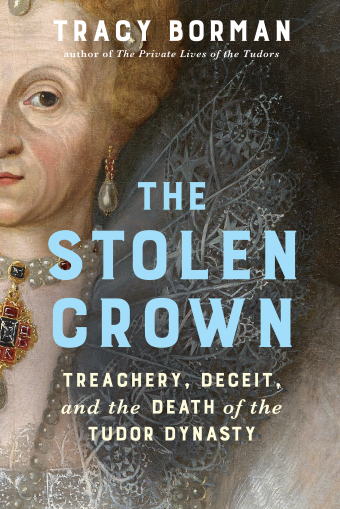
From the publisher: In the long and dramatic annals of British history, no transition from one monarch to another has been as fraught and consequential as that which ended the Tudor dynasty and launched the Stuart in March 1603. At her death, Elizabeth I had reigned for 44 turbulent years, facing many threats, whether external from Spain or internal from her cousin Mary, Queen of Scots. But no danger was greater than the uncertainty over who would succeed her, which only intensified as her reign lengthened. Her unwillingness to marry or name a successor gave rise to fierce rivalry between blood claimants to the throne—Mary and her son, James VI of Scotland, Arbella Stuart, Lady Katherine Grey, Henry Hastings, and more—which threatened to destabilize the monarchy. As acclaimed Tudor historian Tracy Borman reveals in The Stolen Crown, according to Elizabeth’s earliest biographer, William Camden, in his history of her reign, on her deathbed the queen indicated James was her chosen heir, and indeed he did become king soon after she died. That endorsement has been accepted as fact for more than four centuries. However, recent analysis of Camden’s original manuscript shows key passages were pasted over and rewritten to burnish James’ legacy. The newly-uncovered pages make clear not only that Elizabeth’s naming of James never happened, but that James, uncertain he would ever gain the British throne, was even suspected of sending an assassin to London to kill the queen. Had all this been known at the time, the English people—bitter enemies with Scotland for centuries—might well not have accepted James as their king, with unimagined ramifications. Inspired by the revelations over Camden’s manuscript, Borman sheds rare new light on Elizabeth’s historic reign, chronicling it through the lens of the various claimants who, over decades, sought the throne of the only English monarch not to make provision for her successor. The consequences were immense. Not only did James upend Elizabeth’s glittering court, but the illegitimacy of his claim to the throne, which Camden suppressed, found full expression in the catastrophic reign of James’ son and successor, Charles I. His execution in 1649 shocked the world and destroyed the monarchy fewer than 50 years after Elizabeth died, changing the course of British and world history.
Paul L. Hedren, Sitting Bull's War: The Battle of Little Big Horn and the Fight for Buffalo and Freedom on the Plains (Pegasus Books/Simon & Schuster)
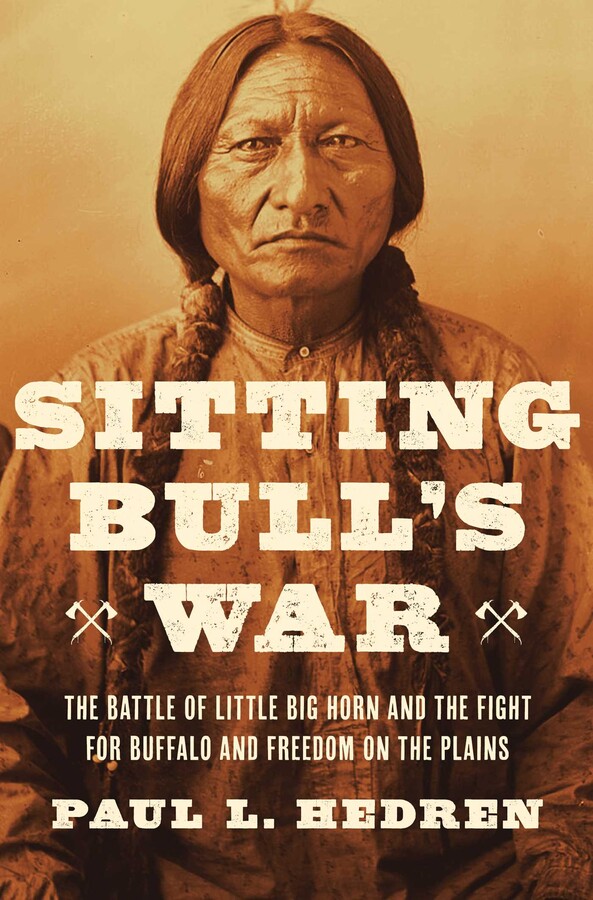
From the publisher: In this deeply affecting account of America’s greatest Indian war, readers are quickly immersed in the world of Lakotas and Northern Cheyennes and their struggle in the 1870s to retain their lives on the buffalo prairie. Those impassioned Northern Indians faced a succession of white invaders—railroaders, borderland surveyors, prospectors, and ultimately the United States Army. In the best of days they turned back George Crook at the Rosebud and wiped out George Armstrong Custer at the Little Big Horn. But a dozen other clashes followed, and in the end these tradition-minded people could not endure the army’s endless hounding. Some fled to Canada to a luring if momentary exile, but in the end one and all faced starvation, submission, and, for some, death. Personifying this traditional way of life was Sitting Bull, legendary Hunkpapa Lakota spiritualist. He was supported throughout by Crazy Horse, Spotted Eagle, Big Road, Little Wolf, and a host of other kindred traditional chiefs and headmen who, in turn, rallied thousands of like-minded men, women, and children. And yet, but for momentary glory against Crook and Custer, this was a war that could not be won. Award-winning author Paul L. Hedren has spent ten years writing this great American epic. Utilizing an array of Lakota and Cheyenne accounts, pictographic renderings, and original interviews, this is the story of a people intent only on adhering to a traditional life on the buffalo prairie. The narrative is broad and inclusive and a welcome addition to the canon of American Indian wars history.
Julia Dobrow, Love and Loss After Wounded Knee: A Biography of an Extraordinary Interracial Marriage (NYU Press)

From the publisher: Like any set of star-crossed lovers, Elaine and Charles came from different worlds. Elaine, an acclaimed childhood poet from a remote corner of the Massachusetts Berkshires, traveled to the Dakota Territories to teach Native American students, undaunted by society’s admonitions. Charles, a Dakota Sioux from Minnesota, educated at Dartmouth and Boston University Medical School, was considered by his Euro-American mentors the epitome of an assimilated Indian. But when they met just ahead of the Wounded Knee Massacre in 1890, the magnetic pull of love brought them together despite the tremendous odds stacked against them. Love and Loss After Wounded Knee offers a dual biography of Elaine Goodale and Ohíye’Sa, (Dr. Charles Alexander Eastman), exploring their individual lives as well as their highly publicized interracial marriage. Both well-known in their own time– Elaine as a poet, journalist, and advocate for Indian education and Charles as writer, public speaker, and ardent activist for Indian rights– their marriage started with a shared vision to work on behalf of Indians. In the face of extreme prejudice, financial burden, and personal tragedy however, the marriage began to unravel. Dobrow paints an intimate, emotional portrait of the Eastmans’ lives drawn from Elaine and Charles’s letters, papers, and hundreds of accounts of the Eastmans’ lives from newspapers. Along the way, she skillfully illuminates the shifting late 19th and early 20th century definitions of Indigenous identity, and reveals how the Eastmans’ legacies reflect changing American attitudes toward gender, interracial relationships and biracial children. The result is a compelling new history that weds the private and the political, and Native America and the United States of America– entwined yet separated, inextricable yet never fully joined, just like Elaine and Charles themselves.
M. J. O'Brien, The Tougaloo Nine: The Jackson Library Sit-In at the Crossroads of Civil War and Civil Rights (University Press of Mississippi)
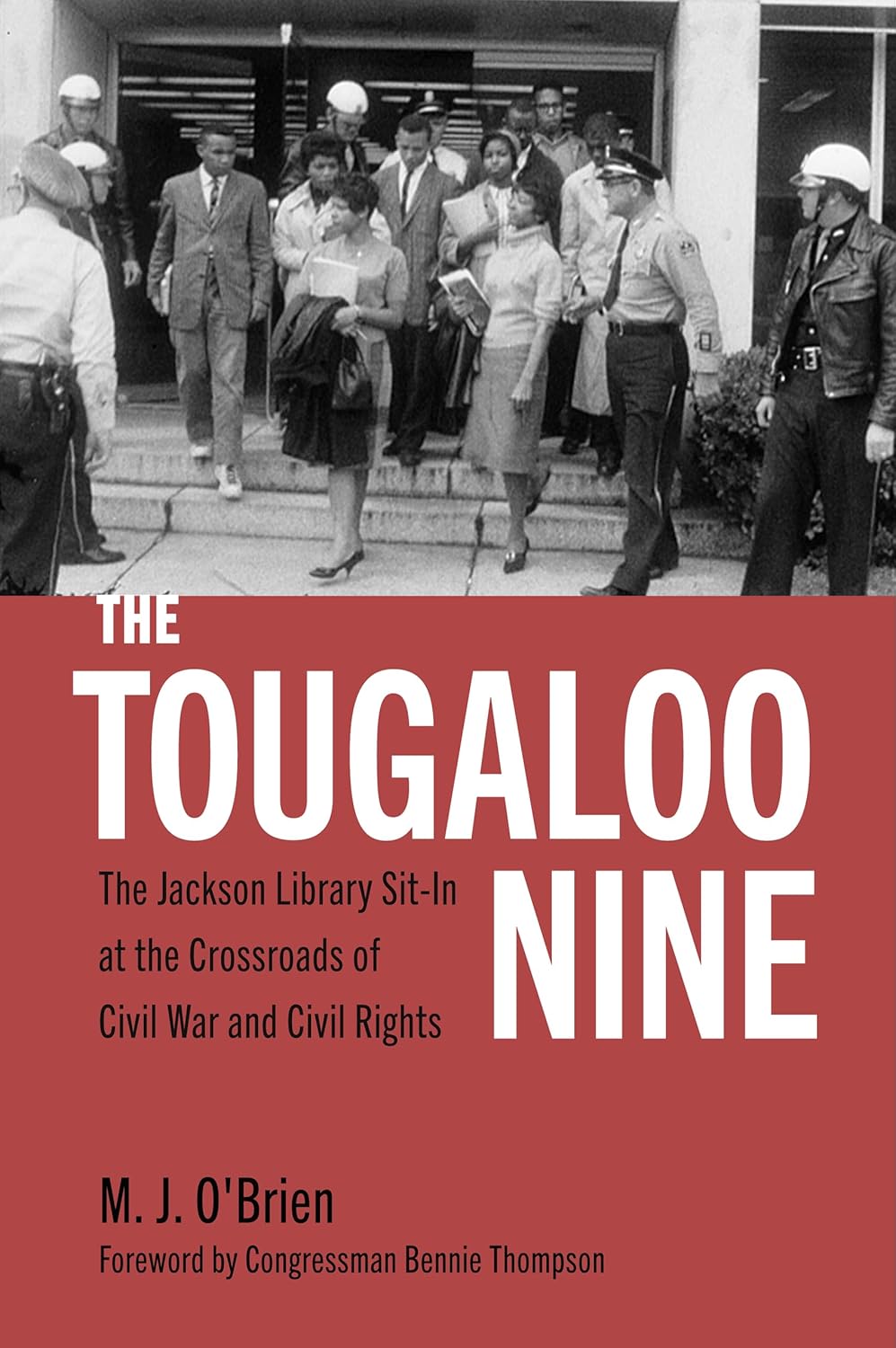
From the publisher: The stunning history of the first student-led, direct-action civil rights demonstration in the state of Mississippi
During a dramatic three-day period in March 1961, nine students from historically Black Tougaloo College staged sit-ins at the all-White Main Library in Jackson, Mississippi. The students conducted their protest and were arrested, held in jail overnight, and convicted of “breach of peace”—the first time that charge had ever been brought in a Mississippi courtroom. Meanwhile, students at Jackson State College held sympathy protests, and the police responded harshly on both day one and day two. On day three, police attacked a peaceful crowd of observers awaiting the trial’s outcome, using attack dogs, billy clubs, and tear gas to disperse the crowd, one of the first known uses of police dogs on a peaceful gathering during the civil rights era. The protests occurred while Mississippi was preparing to celebrate the one hundredth anniversary of the state’s secession from the Union and the commencement of the Civil War. The library sit-in preempted the state’s Confederate extravaganza that brought more than thirty thousand mostly White observers into the streets of Jackson while the students sat in jail, further inflaming passions on both sides. In The Tougaloo Nine, M. J. O'Brien delves into Tougaloo College’s culture of resistance, Mississippi’s determination to preserve segregation, and the early stirrings of the student movement in Jackson. Through numerous interviews and years of detailed research, O'Brien tells the stories of these courageous African American students. He also explores the personalities leading the charge on both sides, including Mississippi NAACP leader Medgar Evers; Tougaloo professors and administrators Ernst Borinski, Reverend John Mangram, and President A. D. Beittel in one camp; and Governor Ross Barnett, Citizens’ Council leader William Simmons, and Jackson Mayor Allen Thompson in the other. Altogether, The Tougaloo Nine presents the stunning picture of those who risked their lives and future livelihoods to fight for full social and political equality in Mississippi, USA.
Richard Bell, The American Revolution and the Fate of the World: A Global History of the American Revolution (Riverhead Books/PRH)
From the publisher: In this revelatory and enthralling book, award-winning historian Richard Bell reveals the full breadth and depth of America’s founding event. The American Revolution was not only the colonies’ triumphant liberation from the rule of an overbearing England; it was also a cataclysm that pulled in participants from around the globe and threw the entire world order into chaos. Repositioning the Revolution at the center of an international web, Bell’s narrative ranges as far afield as India, Africa, Central America, and Australia. As his lens widens, the “War of Independence” manifests itself as a sprawling struggle that upended the lives of millions of people on every continent and fundamentally transformed the way the world works, disrupting trade, restructuring penal systems, stirring famine, and creating the first global refugee crisis. Bell conveys the impact of these developments at home and abroad by grounding the narrative in the gripping stories of individuals—including women, minorities, and other disenfranchised people. The result is an unforgettable and unexpected work of American history that shifts everything we thought we knew about our creation story.
Steve Tibble, Assassins and Templars: A Battle in Myth and Blood (Yale University Press)

From the publisher: The Assassins and the Templars are two of history’s most legendary groups. One was a Shi’ite religious sect, the other a Christian military order created to defend the Holy Land. Violently opposed, they had vastly different reputations, followings, and ambitions. Yet they developed strikingly similar strategies—and their intertwined stories have, oddly enough, uncanny parallels. In this engaging account, Steve Tibble traces the history of these two groups from their origins to their ultimate destruction. He shows how, outnumbered and surrounded, they survived only by perfecting “the promise of death,” either in the form of a Templar charge or an Assassin’s dagger. Death, for themselves or their enemies, was at the core of these extraordinary organisations. Their fanaticism changed the medieval world—and, even up to the present day, in video games and countless conspiracy theories, they have become endlessly conjoined in myth and memory.
Max Perry Mueller, Wakara's America: The Life and Legacy of a Native Founder of the American West (Basic Books)
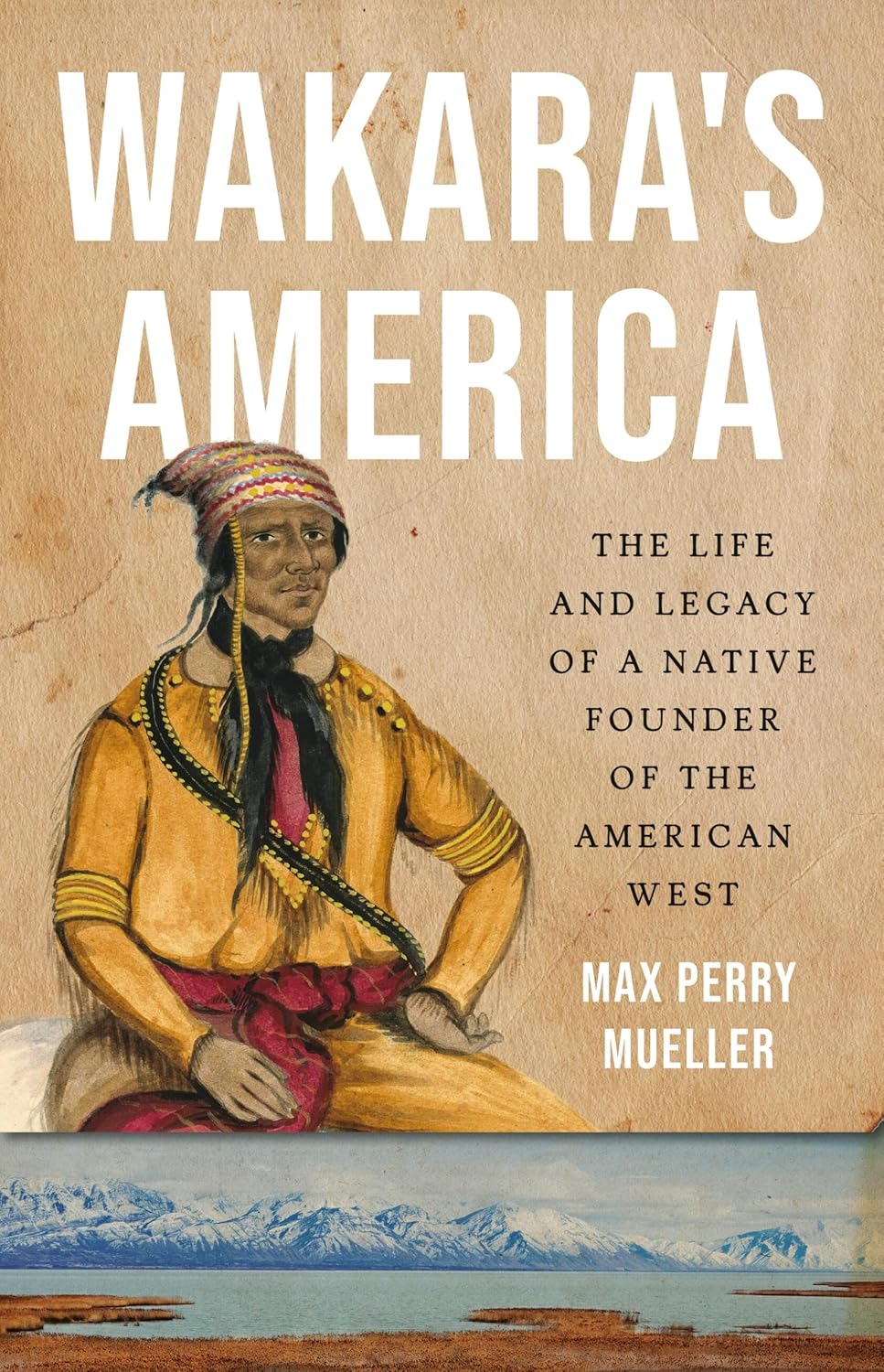
From the publisher: The Native American leader Wakara (ca. 1815–1855) was among the most influential and feared men in the nineteenth-century American West, famed as a fierce warrior, a merciless trader of Indian slaves, and history’s greatest horse thief. In Wakara's America, historian Max Perry Mueller illuminates Wakara’s complex and sometimes paradoxical story, revealing a man who both helped build the settler American West and defended Native sovereignty. Wakara was baptized a Mormon and allied with Mormon settlers against other Indians to seize large parts of modern-day Utah. Yet a pan-tribal uprising against the Mormons that now bears Wakara’s name stalled and even temporarily reversed colonial expansion. Through diplomacy and through violence, Wakara oversaw the establishment of settlements, built new trade routes, and helped create the boundaries that still define the region. Drawing together deep archival research with Native oral histories, archaeology, geology, and ecology, Wakara's America offers an innovative new vision of the history of the American West with Native people at its center. It serves as a powerful testament to Wakara’s legacy, which endures in his story, in his tribal descendants, and in their stewardship of their ancestral lands today.
Ana Garriga and Carmen Urbita, Convent Wisdom: How Sixteenth-Century Nuns Could Save Your Twenty-First-Century Life (Avid Reader/Simon & Schuster)
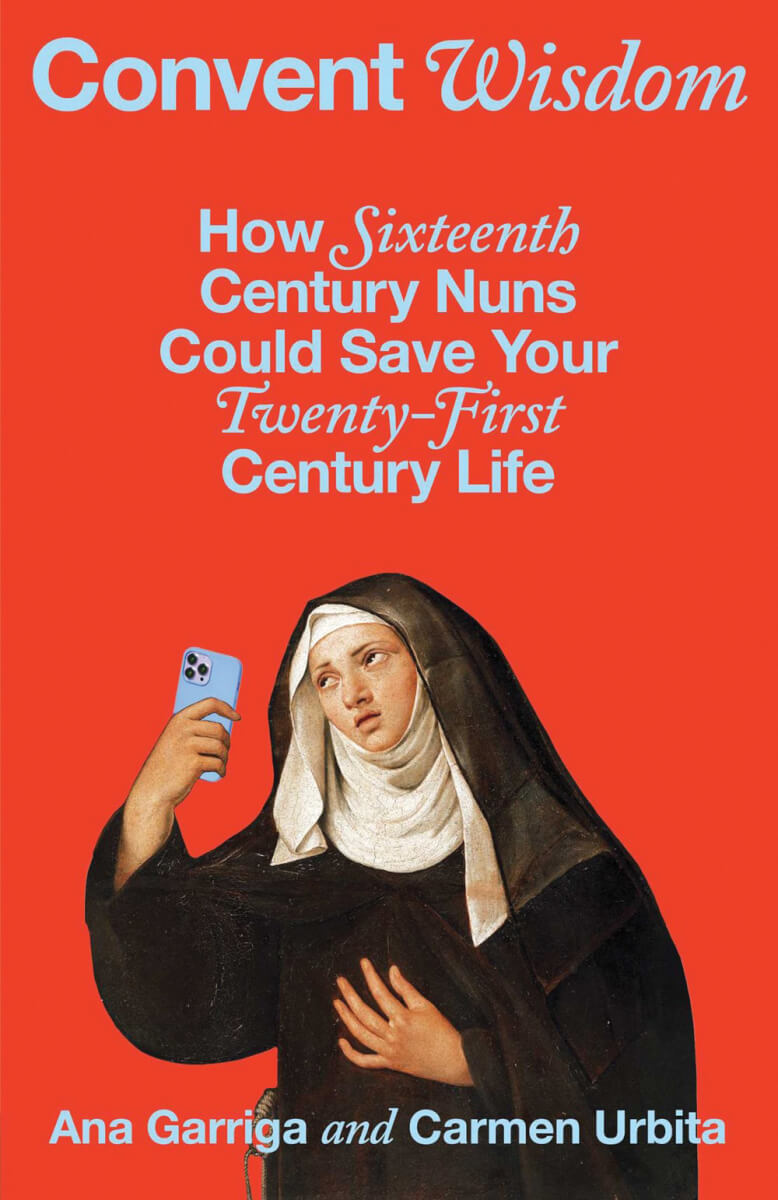
From the publisher: When most of us think of nuns, we picture hands clasped in prayer, solemn shuffles down cloistered halls, and that iconic habit silhouette. But what about the nuns who ate spiderwebs, erupted into jealous fights over makeup, or chain-produced manuscripts for extra cash? In reality, these women were no one-dimensional martyrs. 16th- and 17th-century nuns were resourceful, rebellious, and refreshingly relatable—and their lives hold surprising lessons for us today. Convent Wisdom is your guide to navigating everything from patriarchal bureaucracy to an all-consuming friend crush with help from history’s most fascinating nuns. Struggling with money? Saint Teresa and her fellow Carmelites have recession-proof advice. Scrolling social media and drowning in FOMO? Mary of Jesus of Ágreda’s miraculous ability to engage in bilocation might help you cope. Confounded by a lesbian situationship? The yearnings of Sor Juana Inés de la Cruz contain unexpected insights.
Blending rigorous research with tongue-in-cheek takeaways and weaving pop culture and personal anecdotes throughout, Brown University scholars and best friends Ana Garriga and Carmen Urbita spill the juicy inside scoop on monastic life so you can better conquer today’s anxiety-ridden, hyper-connected world. Be it work woes, unholy diets, or crises of the soul, the nuns of Convent Wisdom are here to guide you—with a wink and a prayer.
Patrick Boucheron, translated by Willard Wood, Political Fictions: From the Middle Ages to the "Post-Truth" Present ( Other Press, PRH)
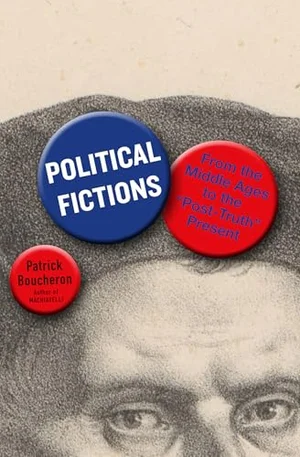
From the publisher: In the wake of Donald Trump’s election, renowned medievalist Patrick Boucheron delivered a powerful, probing series of lectures on “political fictions” in the context of rising authoritarianism and populism. Adapted here for the first time in English, they offer key insights into how we arrived at our current global moment and what history can teach us about moving forward. Long before Trump parlayed his reality TV character into a presidential victory with the MAGA movement, aspiring rulers have used the art of storytelling and the power of fable to control others. Discussing seminal works from Machiavelli’s The Prince and Hobbes’s Leviathan to Orwell’s 1984 and the writings of Nazi jurist Carl Schmitt, Boucheron explores the profound interconnectedness of political theory and fiction, and the tension between politics and the political.
Lorissa Rinehart, Winning the Earthquake: How Jeannette Rankin Defied All Odds to Become the First Woman in Congress (St. Martin's Press)

From the publisher: Born on a Montana ranch in 1880, Jeannette Rankin knew how to ride a horse, make a fire, and read the sky for weather. But most of all, she knew how to talk to people and convince them of her vision for America. It was this rare skill that led her, in 1916, to become the first woman ever elected to the House of Representatives. As her first act, Rankin introduced the legislation that would become the 19th Amendment. Throughout her two terms in 1916 and 1940, she continued to introduce and pass legislation benefitting unions, protecting workers, and increasing aid for children in poverty. In 1941, she stood tall as the sole anti-war voice in Congress during WWII, stating that you can no more win a war than you can win an earthquake. A suffragist, feminist, pacifist, and workers' rights advocate, Rankin remained ever true to her beliefs—no matter the price she had to pay personally. Yet, despite the momentous steps she made for women in politics, overcoming the boys club of career politicians who never wanted to see a woman in Congress, Jeannette Rankin’s story has been largely forgotten. In Winning the Earthquake, Lorissa Rinehart deftly uncovers the compelling history behind this singular American hero.
Darrin Lunde, Palace of Deception: Museum Men and the Rise of Scientific Racism (W. W. Norton)
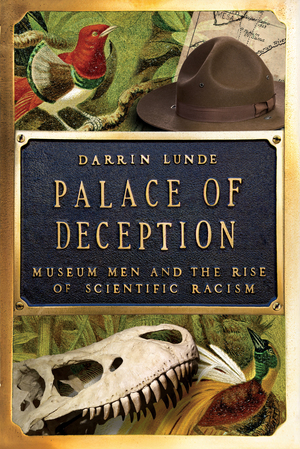
From the publisher: From 1908 to 1933, the American Museum of Natural History launched more scientific field expeditions than at any other time in its existence. Sponsoring lavish trips to Africa and Central Asia, the museum filled its halls with artifacts and an aura of adventure, supported by some of New York City’s most prominent men, including Theodore Roosevelt and J. P. Morgan. All the while, the museum’s then president, Henry Fairfield Osborn, attempted to use his adventurers’ expeditions to fulfill a personal agenda: to propagate his belief in racial hierarchy. Palace of Deception uncovers the complicated legacy of three iconic figures of the American Museum: the preeminent explorer Roy Chapman Andrews; Carl Akeley, the pioneering taxidermist who created so many of the museum’s most memorable exhibits; and Osborn, the museum’s president, who was once considered an authority on everything from paleontology and evolution to race and eugenics. From Andrews’s ambitions searching for fossils in the Gobi Desert to the construction of Akeley’s artistic masterpiece, the Hall of African Mammals, Darrin Lunde tells the story of the American’s Museum foundational years. Lunde also shows how the achievements of the museum’s adventurers were used to introduce residents of New York to a version of the natural world—one full of strict natural laws and categories—endorsed by the museum’s powerful leader. Based on extensive diaries, letters, journals, and the author’s own experiences leading modern-day expeditions to several of the same places, Palace of Deception re-creates some of the most celebrated, globe-trotting journeys from natural history’s heyday. It also traces the larger, racially infused milieu that underwrote the golden age of exploration, uncovering the simmering anxieties about race behind the era’s greatest adventures. It is a legacy that still haunts natural history institutions today.
Emily Lieb, Road to Nowhere: How a Highway Map Wrecked Baltimore (University of Chicago Press)
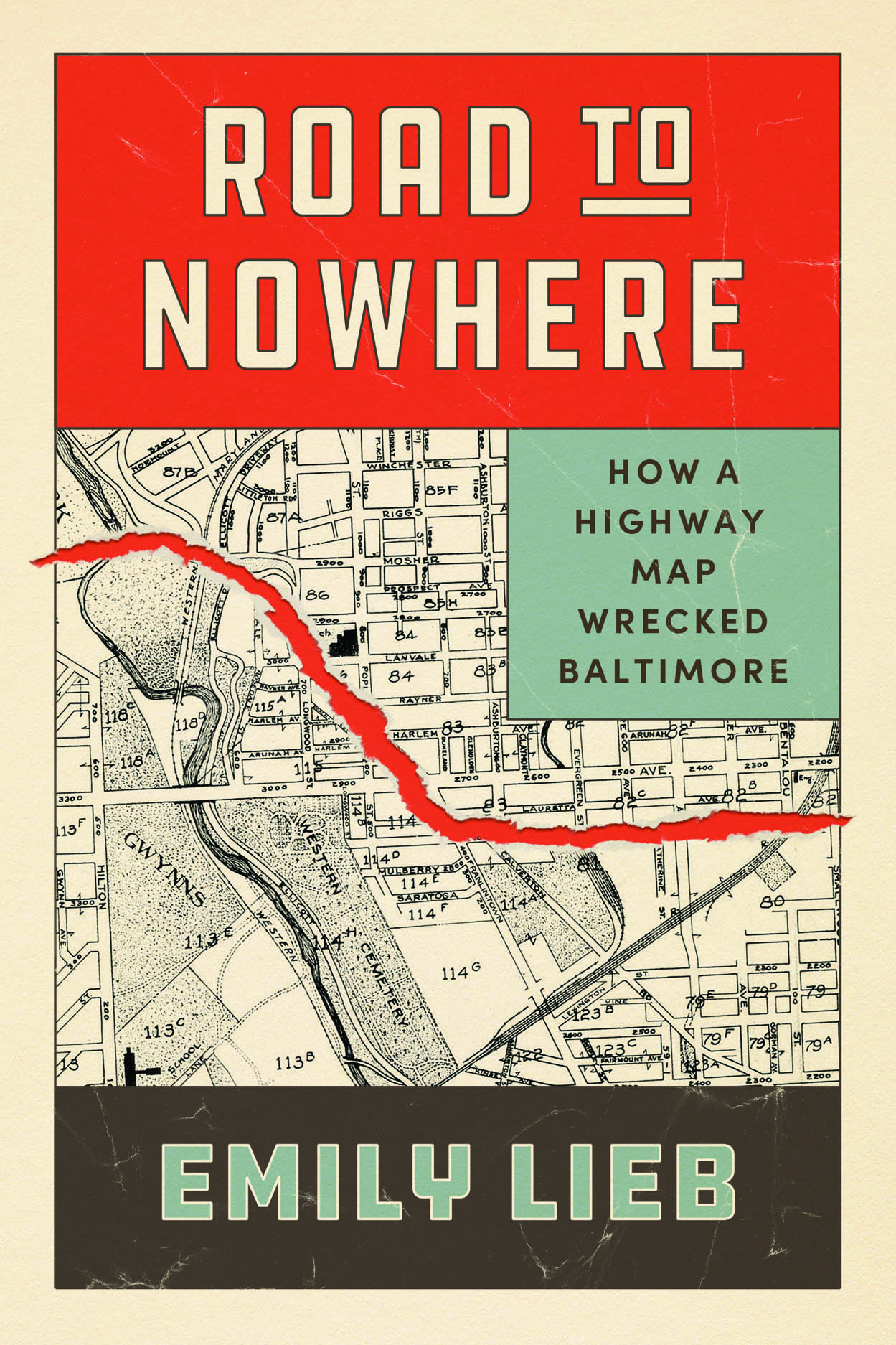
From the publisher: In the mid-1950s Baltimore’s Rosemont neighborhood was alive and vibrant with smart rowhouses, a sprawling park, corner grocery stores, and doctor’s offices. By 1957, a proposed expressway threatened to gut this Black, middle-class community from stem to stern.
That highway was never built, but it didn’t matter—even the failure to build it destroyed Rosemont economically, if not physically. In telling the history of the neighborhood and the notional East–West Expressway, Emily Lieb shows the interwoven tragedies caused by racism in education, housing, and transportation policy. Black families had been attracted to the neighborhood after Baltimore’s Board of School Commissioners converted several white schools into “colored” ones, which had also laid the groundwork for predatory real-estate agents who bought low from white sellers and sold high to determined Black buyers. Despite financial discrimination, Black homeowners built a thriving community before the city council formally voted to condemn some nine hundred homes in Rosemont for the expressway, leading to deflated home values and even more predatory real estate deals. Drawing on land records, oral history, media coverage, and policy documents, Lieb demystifies blockbusting, redlining, and prejudicial lending, highlighting the national patterns at work in a single neighborhood. The result is an absorbing story about the deliberate decisions that produced racial inequalities in housing, jobs, health, and wealth—as well as a testament to the ingenuity of the residents who fought to stay in their homes, down to today.
Giles Tremlett, El Generalisimo: A Biography of Francisco Franco (Oxford University Press)
From the publisher: Supported by his allies, Adolf Hitler and Benito Mussolini, Francisco Franco rose to power by defeating the Loyalists in the Spanish Civil War that lasted from 1936 to 1939. Yet while Hitler and Mussolini did not survive World War II, Franco remained Spain's strongman ruler until his death thirty years later. Perhaps more compelling than how he gained absolute power is how he retained it for so long, virtually unopposed, making him one of history's most successful dictators. In El Generalisimo, Giles Tremlett reveals how Franco's ascent and extraordinary endurance stemmed from his determination to reverse history, returning Spain to its glory days as a globe-spanning empire. Fuelled by paranoia, a rigid sense of order and tradition, and a belief in the redemptive power of warfare--all the earmarks of fascism--Franco moved rapidly through the ranks in the army and took advantage of political and social upheaval to launch a revolt against democracy. He was determined to rescue Catholic Spain from a conspiracy of leftists, freemasons, liberals and their foreign or Jewish sponsors. The Spanish Civil War served as the opening salvo of World War II, yet after it was over, despite ending up on the wrong side of history, Franco consolidated his hold on power, combining an iron grip with elements of benevolent rule to maintain popularity and weaken would-be opponents. anyone who considered opposing him. In the modernizing and democratizing postwar world, Franco was able to parlay cold war politics into a survival strategy. Those nations, including the United States, who had once denounced and dismissed him as a fascist relic actively sought him out as a partner in the fight against communism. For over three decades Franco presided over a Spain that was rapidly urbanizing and industrializing, opening itself up to tourism. Yet while social and political upheaval swept through Western Europe, Spain remained a comparative backwater, frozen in time. Francoism had offered itself as a bulwark against instability and it proved an ideology that many Spaniards learned to live with, one that has left its mark to this day.
Jovana Babovic, The Youngest Yugoslavs: An Oral History of Post-Socialist Memory (Indiana University Press)

From the publisher: Reflecting on the final decades of socialism, eight individuals born in former Yugoslavia between 1971 and 1991 recount their memories of childhood and early adulthood, and how that time period has made a lasting impact on their lives. The Youngest Yugoslavs is an oral history collection that gives its readers in-depth, varied perspectives on why Yugoslavia continues to resonate among its former citizens more than 30 years since the state collapsed amid war, genocide, and dislocation. Their interviews with author Jovana Babović' showcase how these individuals remember their childhoods during the final decades of socialism and how they conceptualize the lasting impact Yugoslavia has had on their lives. The Youngest Yugoslavs offers insight on how this generation of Yugoslav individuals have reconciled the loss of their homeland and how they have continued to find meaning in the Yugoslav past as both a lived experience and as a set of ideals.
